Indonesian Law Enforcement: A Sharia Perspective on the Rechterlijk Pardon Principle
Keywords:
Indonesian Law; Sharia Perspective; Rechterlijk Pardon Principle
Abstract
The purpose of criminal law is to achieve justice by the imposition of punishment, and it is the judge's responsibility to decide how best to punish a criminal. The new Criminal Code in Indonesia now includes the Rechterlijk pardon principle, which serves as a standard for judicial forgiveness in criminal cases. With a philosophical, historical, statutory, conceptual, and case-based approach, this research is normative legal research.The rechterlijk pardon principles that underpin legal doctrines and statutes are precisely and accurately understood through conceptual approaches. The findings of this study clarify that the new Criminal Code's "rechterlijk pardon" principle is a novel concept that includes rules governing judges' discretionary power to pardon or forgive those who have committed crimes. The study of Islamic law as it is presented in the Koran and hadith is associated with the idea of punishment, which is a relative theory (Deterrence). According to this theory, punishment serves as a tool for accomplishing beneficial objectives rather than as a way of punishing the wrongdoer in order to safeguard society's progress. From a progressive legal standpoint, this is significant because under Islamic criminal law, the judimahta'zir is entitled to the judge's pardon.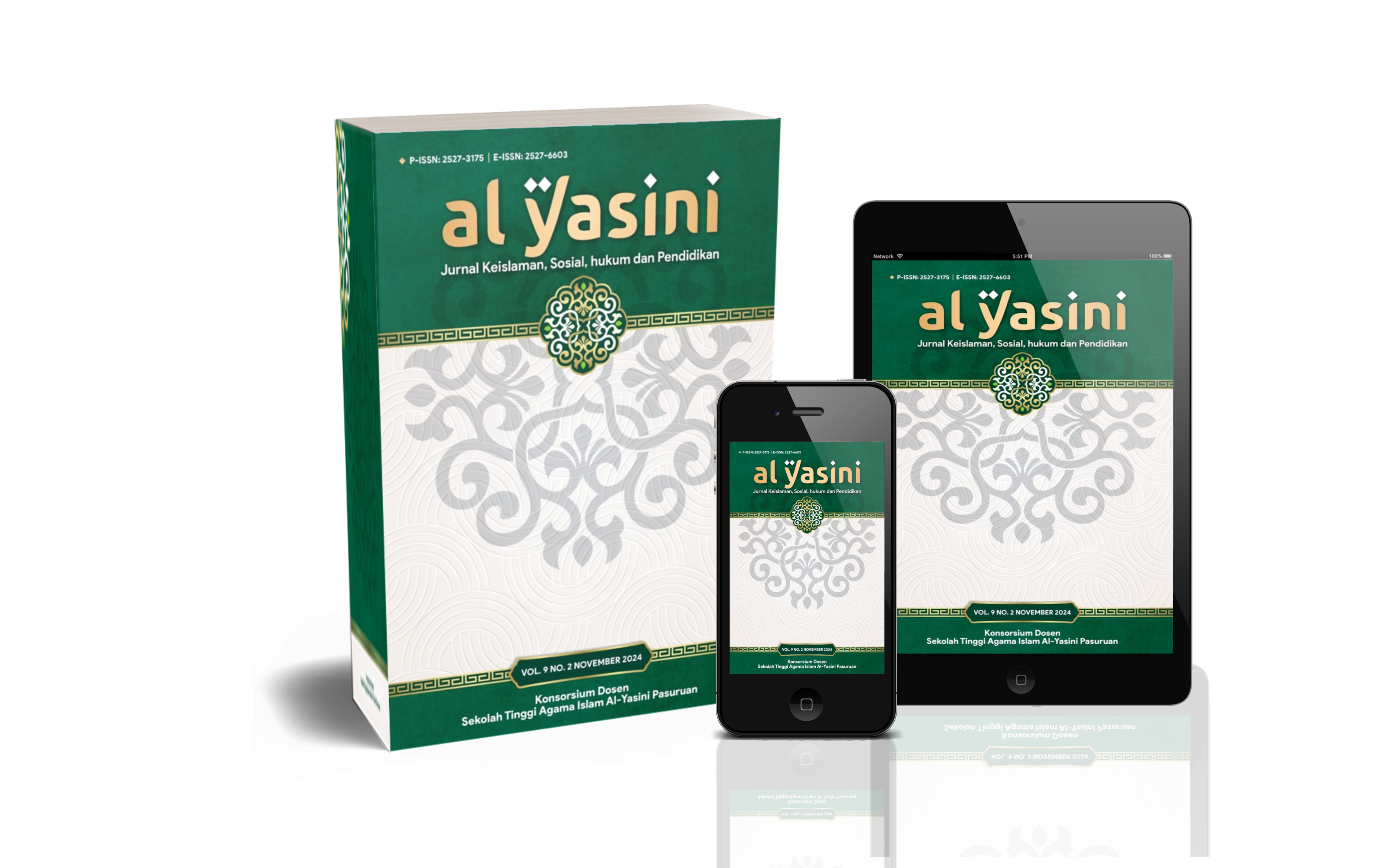
Published
2025-11-28
How to Cite
Dwi, Dwi Putri Melati, Rudi Nopiansyah, and Serlika Aprita Lika. “Indonesian Law Enforcement: A Sharia Perspective on the Rechterlijk Pardon Principle”. Al Yasini : Jurnal Keislaman, Sosial, hukum dan Pendidikan 10, no. 6 (November 28, 2025): 520. Accessed October 25, 2026. https://ejournal.kopertais4.or.id/tapalkuda/index.php/alyasini/article/view/7097.
Issue
Section
Articles
Copyright (c) 2025 Dwi Putri Melati Dwi, Rudi Nopiansyah, Serlika Aprita Lika

This work is licensed under a Creative Commons Attribution-NonCommercial-ShareAlike 4.0 International License.
Contents on this site are licensed under Creative Commons Attribution-NonCommercial-ShareAlike 4.0 International (CC BY-NC-SA 4.0)



1.png)